

Hemp fibre. Everything rockwool does, without the landfill.
TerraFibre grow mats give you the moisture retention and root support you rely on, with no pre-soak, no mineral dust and no disposal problem. Made in Drayton Valley from Canadian hemp.
The rockwool problem
Three reasons growers start looking for an alternative
It never goes away
Rockwool is spun from molten basalt. It can't be composted, can't be recycled, and won't break down in landfill. Every flat you use is permanent waste, and at commercial volume a standing disposal cost with no end date.
It's uncomfortable to handle
Dry rockwool sheds fine mineral fibres. Most growers learn to wet flats before handling and to avoid working with them in an enclosed space. Manageable, but a daily annoyance that doesn't need to exist.
It needs conditioning first
Rockwool is alkaline out of the bag, typically pH 7.8 to 8.5. Before seeding it has to soak in pH-adjusted water. That's an extra step, extra water and extra pH-down on every single batch.
Side by side
Rockwool cubes vs hemp grow mats
| TerraFibre hemp grow mats | Rockwool cubes | |
|---|---|---|
| Pre-soak and pH conditioning | Not required | Required before every batch |
| Handling precautions | None, no dust | Wet before handling |
| Harvest | Clean lift, no residue | Roots grip the flat, residue in the cut |
| End of life | Compost, roots and all | Landfill only |
| Chemical binders | None | Varies by brand |
| Formats | 10×20, 5×5, or cut from a 120ft roll | Fixed sizes |
| Manufacturing | Mechanical, Drayton Valley AB | Energy-intensive, imported |
| Water retention | Excellent | Excellent |
Swipe the table sideways to compare.
Why it works
What hemp does differently
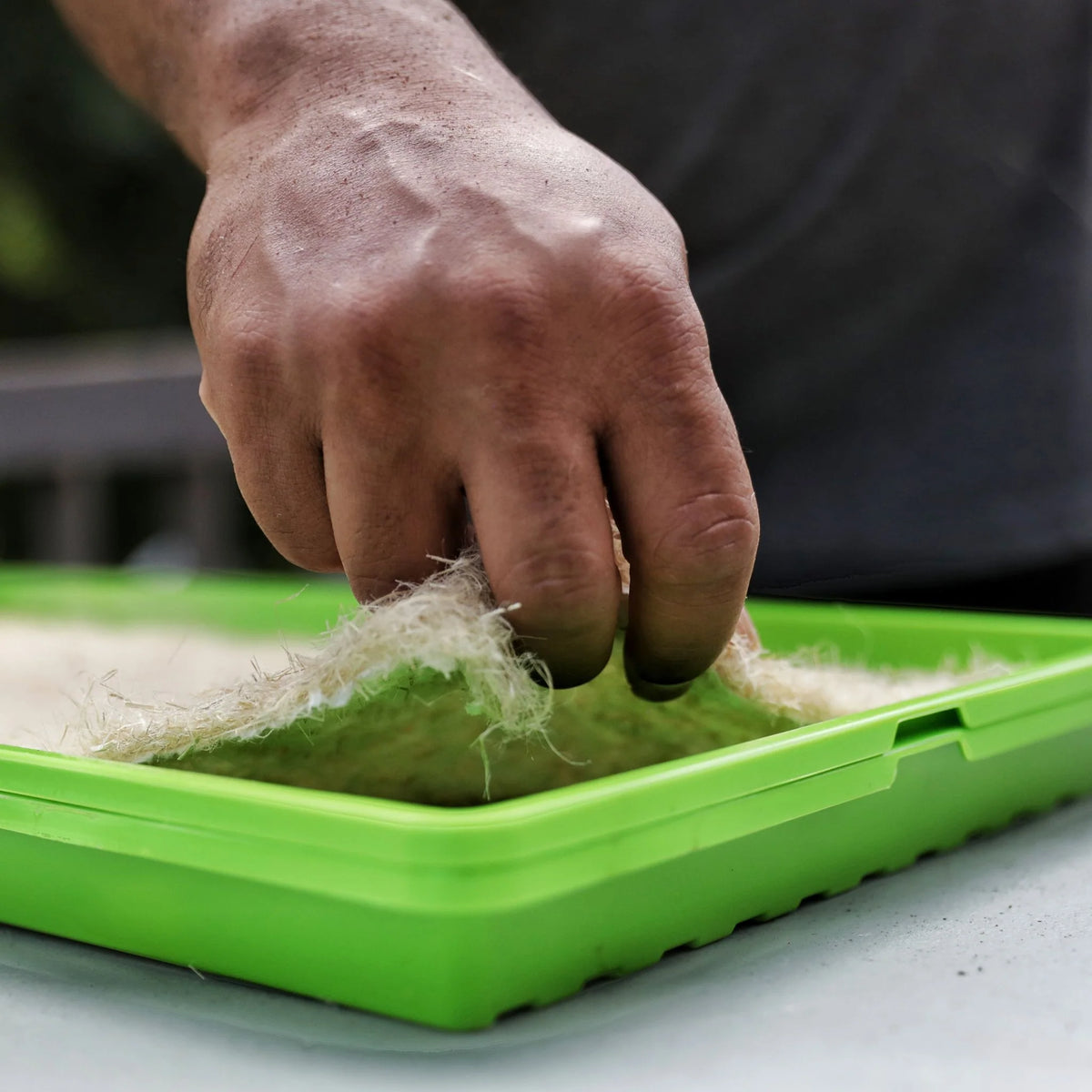
Nothing to do before you start
Rockwool needs soaking and pH conditioning before a seed touches it. A hemp mat doesn't. Take it out of the pack, lay it in the tray, saturate it, seed it. On a seven-day microgreens cycle, removing a prep stage from every batch is a meaningful share of your total handling time.
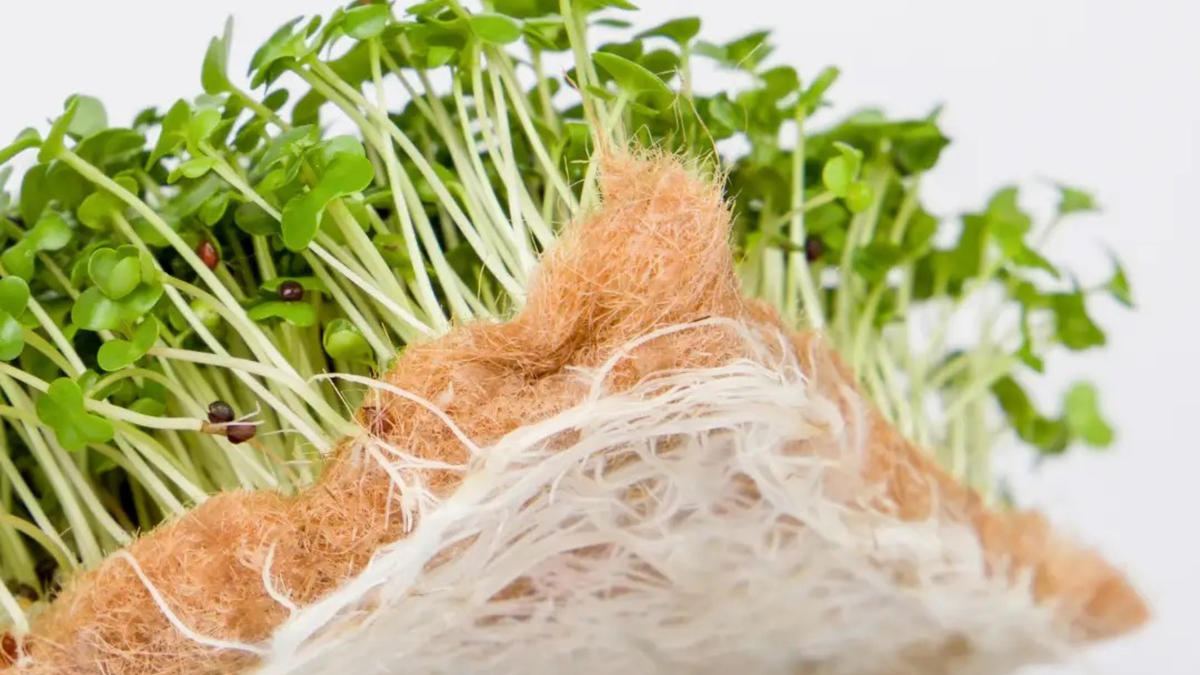
Moisture where the roots are, not on the surface
Hemp fibres hold up to 1,050% of their own weight in water, but they hold it inside the fibre structure rather than pooling on top. The surface dries as air and light reach it while moisture stays available below. Standing surface moisture is what mold needs to establish, so this matters more on densely sown crops than almost anything else.
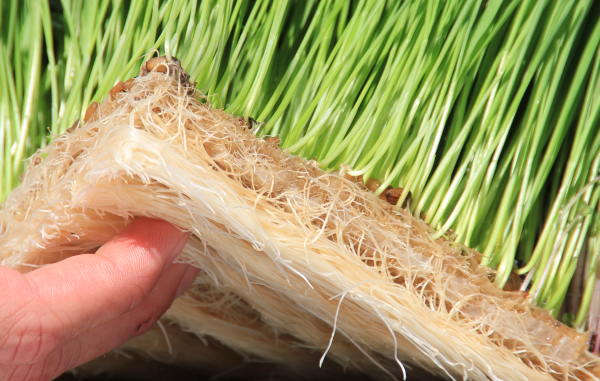
Roots anchor into the fibre, and stay there
The needle-punched structure gives radicles something to grip immediately. Seedlings stand upright and uniform through blackout and into light. At harvest, cut above the mat and the greens lift away with nothing attached: no residue in the cut, no washing step, longer shelf life.
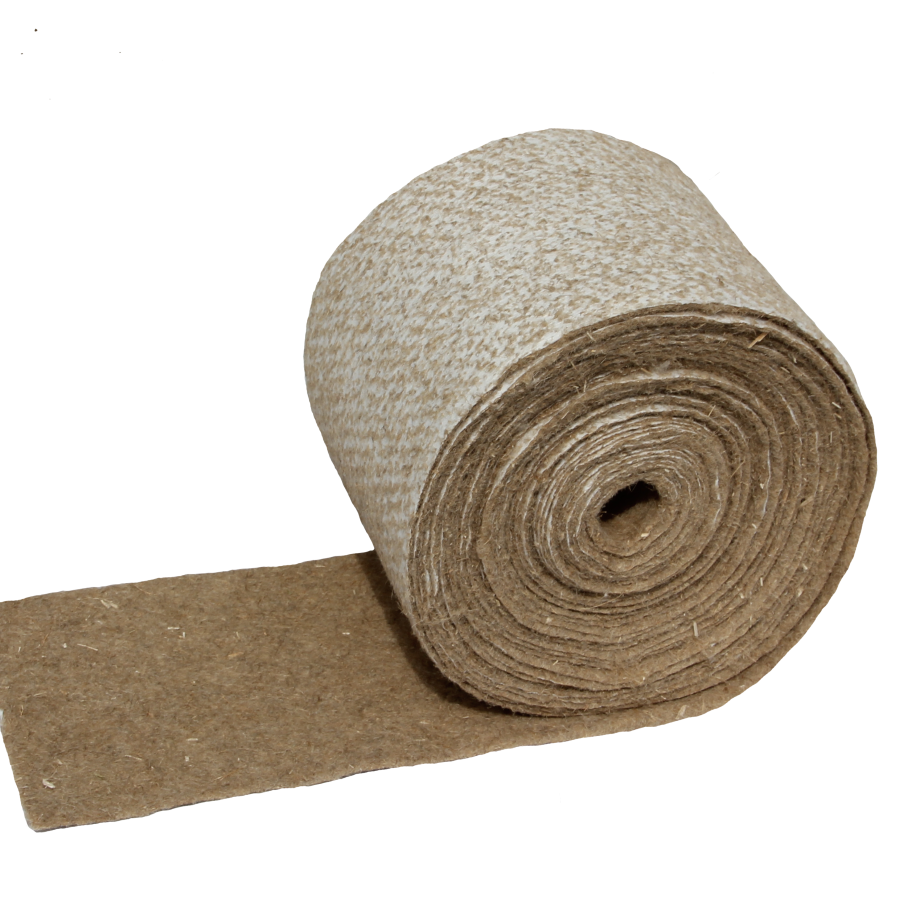
Cut to whatever size you actually need
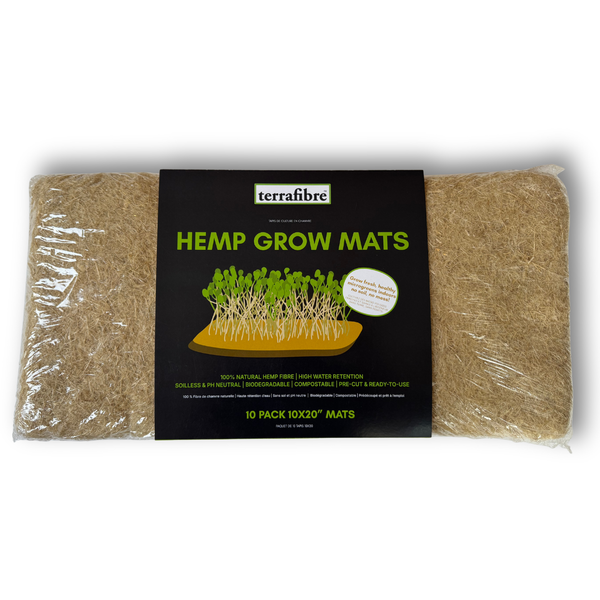
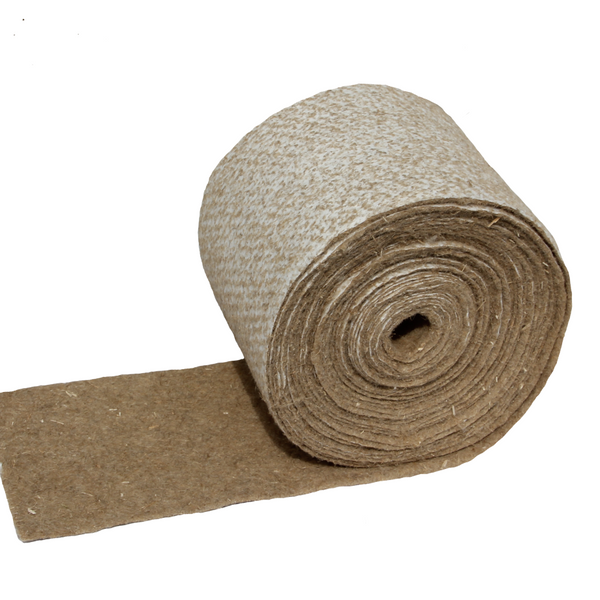
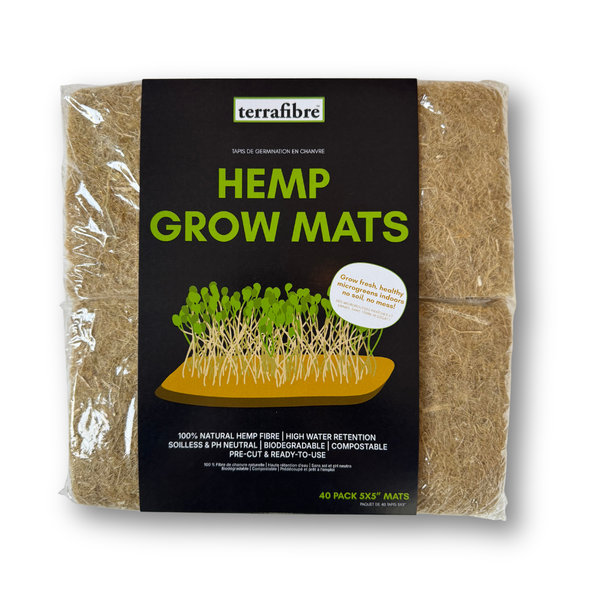
Standard 10″ × 20″ for 1020 trays, 5″ × 5″ for smaller trays and retail, and a 10″ × 120′ roll for anything else. Fodder systems and custom rack dimensions are exactly what the roll is for. Standard weight is 300 gsm; 500 and 750 gsm are made to order for crops wanting more depth.

One clean disposal, no waste stream
The mat goes into compost whole, root mass and all. Nothing to separate, nothing to sort, nothing to landfill. For a commercial operation, that removes a recurring line item rather than reducing it.
Common questions from rockwool growers
Switching growing medium isn't a decision most growers make lightly. These are the questions we're asked most often.
Do I need to pre-soak or pH adjust TerraFibre mats before use?
No. Rockwool arrives alkaline and has to be soaked in pH-adjusted water before you can seed it. TerraFibre mats are mechanically separated hemp fibre with no chemical treatment, so there's no conditioning step. Saturate the mat and seed it. For anyone running a lot of trays, that removes a prep stage from every batch, and the pH-down that goes with it.
Will the mat hold together through a full grow cycle?
Yes. The needle-punching process interlocks the fibres mechanically rather than binding them with glue, which is what gives the mat its structure. Hemp is one of the strongest natural fibres available. Roots anchor into the fibre as they develop, and the whole mat lifts out of the tray in one piece at harvest. Breakdown happens in compost, where moisture, microbial activity and no living root system work together.
Can I use TerraFibre mats in my existing setup?
In most cases, yes. Our 10″ × 20″ mats fit standard 1020 trays, and 5″ × 5″ suits smaller trays and retail displays. For fodder systems or custom tray dimensions, the 10″ × 120′ roll cuts to whatever size you need. They work with bottom-watering trays, stacked blackout setups and vertical racks. If you're running something unusual, get in touch, since we manufacture in-house and can often cut to spec.
Will hemp fibre change my nutrient solution or EC readings?
Hemp fibre is a natural material rather than an inert mineral, so it isn't identical to rockwool in how it interacts with solution. In practice, growers running standard microgreens and fodder programs report no meaningful change to their routine. If you manage EC closely in a recirculating system, trial a single tray alongside your usual setup and watch your readings before switching the operation over.
How do I dispose of used mats?
Compost them. The mat goes in whole with the root mass still in it: nothing to separate, nothing to sort, nothing to landfill. For commercial growers this is often the largest single difference. Rockwool disposal is a recurring cost line with no end date. Hemp fibre removes it rather than reducing it.
Can I use grow mats instead of rockwool cubes for cuttings or seedling propagation?
No, and we'd rather say so plainly than have you find out on a tray. Grow mats are a flat medium built for densely sown, short-cycle crops: microgreens, wheatgrass, fodder and sprouts. They don't provide the rooting depth a cutting or a transplant-up seedling needs. If you're propagating cuttings, rockwool cubes or a coir plug remain the right tool. Where mats replace rockwool is in flat and sheet applications, and that's where the disposal problem hits hardest anyway.

Commercial growers
Growing at volume? Let's talk.
If you're running rockwool flats across a commercial microgreens, wheatgrass or fodder operation, the switch is worth costing out properly, and disposal is usually where the numbers move most. We manufacture in Drayton Valley and cut to spec. Bulk rolls, custom widths and heavier 500 or 750 gsm weights are all available on request. Tell us your tray dimensions, weekly volume and what you're growing, and we'll come back with pricing and a recommended format.
Request bulk pricing