

Coco coir vs hemp
Coir made sense. But is it sustainable?
Coco coir is cleaner than soil and holds water well, which is why so many microgreen growers moved to it. But it needs preparing before every batch, quality shifts between suppliers, and it travels thousands of kilometres before it reaches your tray. TerraFibre grow mats are ready out of the pack and made in Drayton Valley, Alberta.
The coir problem
Four things coir growers work around
It needs preparing first
Compressed coir has to be hydrated and expanded before use, and depending on the source, rinsed to flush salts. On a seven-day cycle, that prep is a real share of your handling time.
Quality shifts between suppliers
Coir depends on the source material, the wash and the processing. Two bales from different suppliers behave differently, which is a problem when you're standardising results across trays.
Loose material ends up in your cut
Coir clings to roots and travels into the harvest. That means a washing step, and for anyone selling to restaurants or markets, a less consistent product.
It travels a long way
Coir reaching a Canadian grow room has typically shipped from Sri Lanka, India or Southeast Asia: thousands of kilometres before it does any growing.
Side by side
Coco coir vs hemp grow mats
| TerraFibre hemp grow mats | Coco coir | |
|---|---|---|
| Prep before use | None, use straight from the pack | Hydrate, expand, sometimes rinse |
| Batch consistency | Manufactured to spec | Varies by supplier and bale |
| Harvest | Clean lift, no residue | Loose material in the cut |
| Root penetration | Open needle-punched structure | Compacts over the cycle |
| Composting | Composts with the root mass | Slow to break down |
| Typical origin | Drayton Valley, Alberta | Sri Lanka, India, SE Asia |
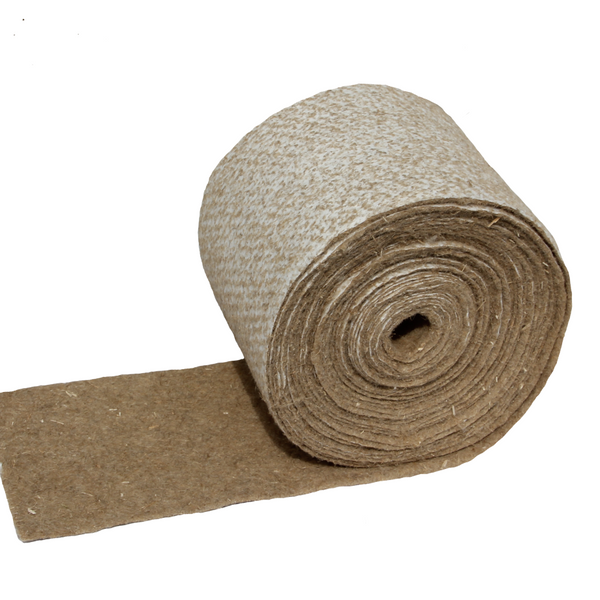
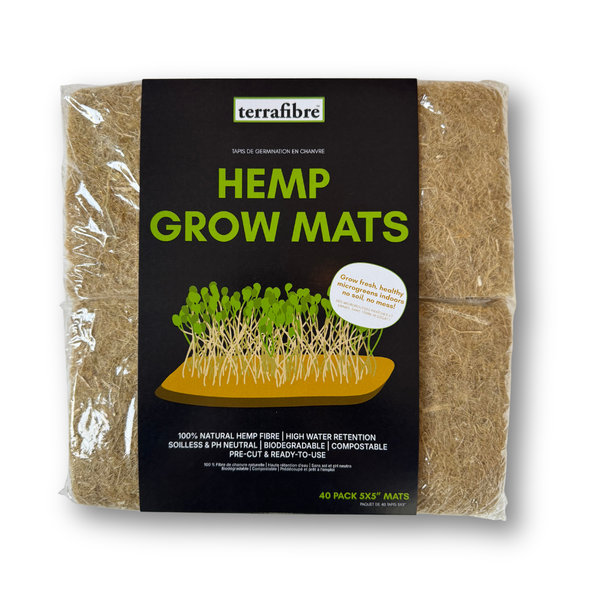
| Formats | 10×20, 5×5, blocks, or 120ft roll | Loose or compressed bale |
| Water retention | Excellent | Good |
Swipe the table sideways to compare.
Why it works
What hemp does differently
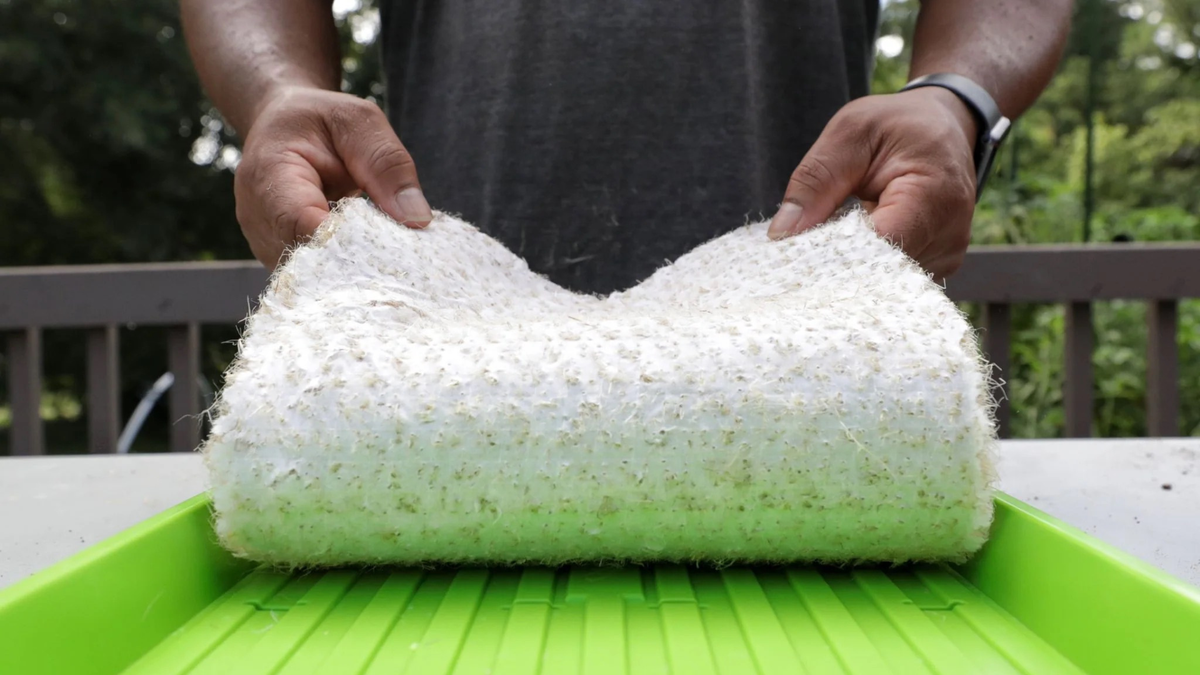
Nothing to do before you start
Open the pack, lay the mat in the tray, saturate, seed. No expansion, no rinsing, no waiting. It really is as short as it sounds: step one, open the packet. Step two, put the mat in the tray.
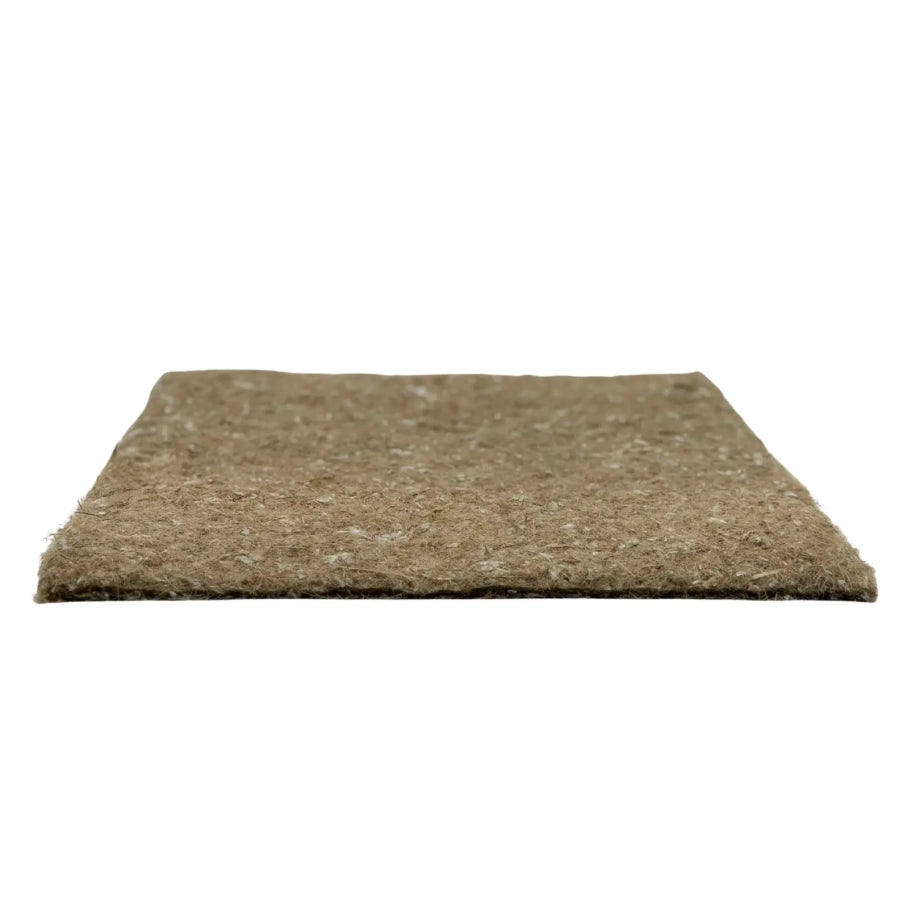
The same mat every time
Every mat is made to the same specification at the same facility. A 300 gsm mat this month behaves like a 300 gsm mat next month, which matters when you're running standing orders and can't afford a variable in the medium.
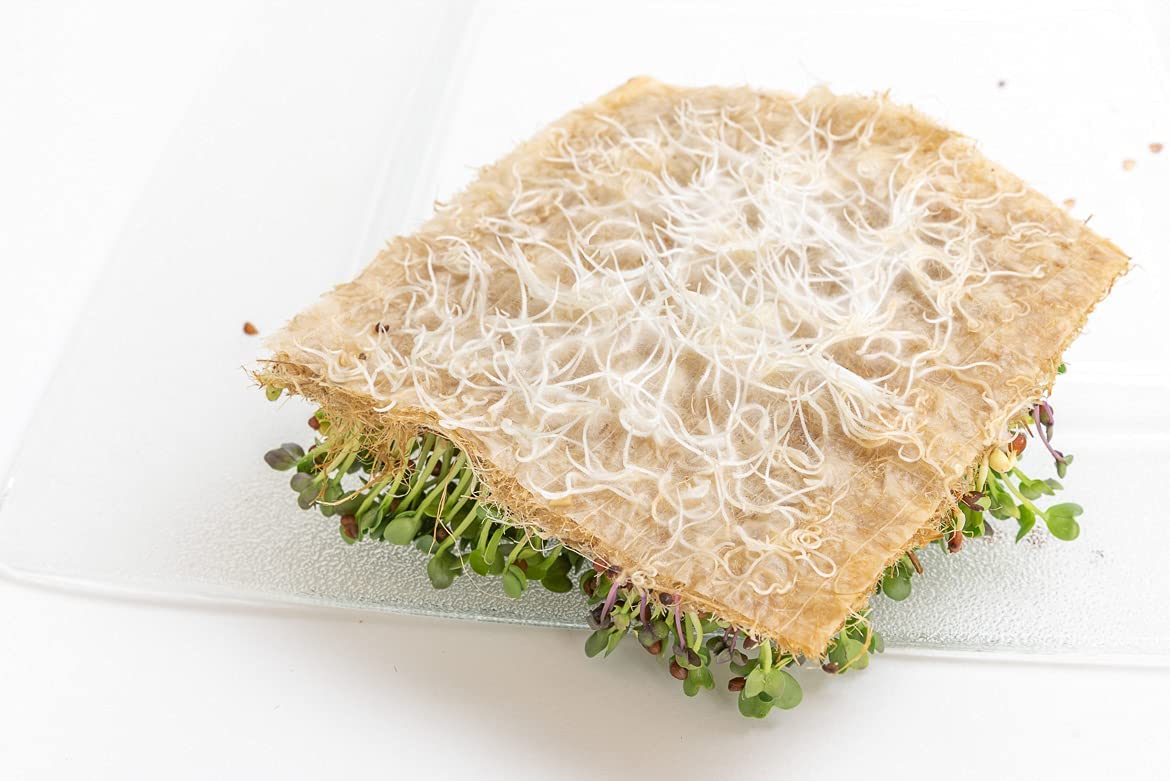
Roots go in, and stay in
The needle-punched structure is deliberately open rather than tightly woven, so radicles penetrate the fibre instead of sliding across it. At harvest, cut above the mat and the greens lift with nothing attached.

One mat, one clean disposal
The mat composts whole with the root mass in it. No loose material to sweep up, no bale to store, nothing to sort at the end of a cycle.
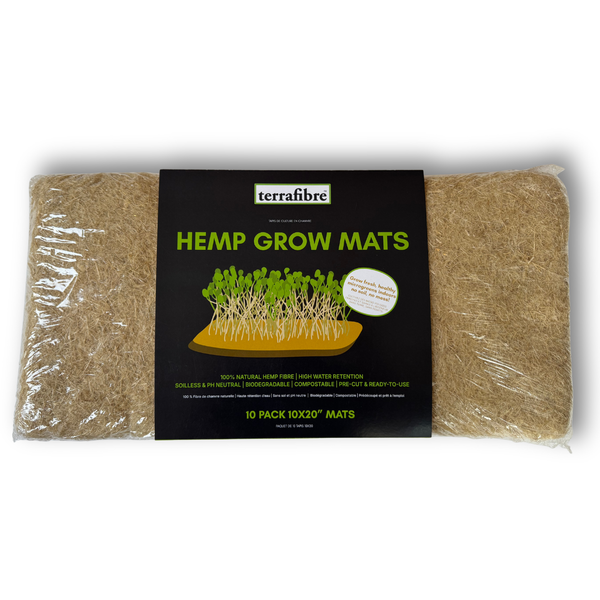
Questions from coir growers
The questions we're asked most often by growers thinking about making the switch.
Do I need to rinse or buffer TerraFibre mats like I do with coir?
No. The mats are mechanically separated hemp fibre with no chemical treatment and no salt content to flush, and they're pH neutral. Saturate the mat and seed it.
Does hemp hold as much water as coir?
Hemp fibre holds up to 1050% of its weight in water. The difference growers notice most is where the water sits: it's held inside the fibre structure rather than pooling on the surface, so the top dries while moisture stays available below.
Can I switch from coir without changing my routine?
Mostly, yes. Seeding density, blackout time and light schedule stay the same. You'll water a little more often than with a deep coir bed, and bottom-watering keeps that simple. Run a few trays alongside your usual setup before switching the whole operation.
Is hemp more expensive than coir per tray?
On the media line alone, compressed coir is usually cheaper per tray. The case for hemp is in what sits around it: no hydrating or rinsing step, no bale storage, no washing at harvest and no loose material to clear. For commercial growers that's worth costing out per tray rather than per unit, and we're happy to help you run those numbers.
Which crops do the mats suit?
Small-seeded microgreens such as arugula, broccoli, cress and radish, plus wheatgrass and sprouts. For large seeds like sunflower and pea shoots, some growers prefer a deeper medium. A sample is the quickest way to check your own crop list.

Commercial growers
Growing at volume? Let's talk.
If you're running coir across a commercial microgreens operation, the switch is worth costing out on a per-tray basis rather than per-unit, since prep labour is usually where the numbers move. Send us your weekly tray count, tray dimensions and what you're growing, and we'll come back with pricing and a recommended format.
Request bulk pricing